What is the danger?
AI can now clone a person’s voice from a few seconds of audio and generate a realistic video of their face in real time. Criminals use this to impersonate family members, bosses and public figures, and to steal money, data and trust at a scale that was impossible a few years ago.
How it happens
- A short clip from social media is enough to clone a voice.
- Live face-swap tools let a scammer appear as someone else on a video call.
- Fake “emergency” calls from a loved one pressure victims to send money fast.
- Fake videos of celebrities and officials promote investment and crypto scams.
- Deepfake candidates pass remote job interviews to get inside companies.
Real cases
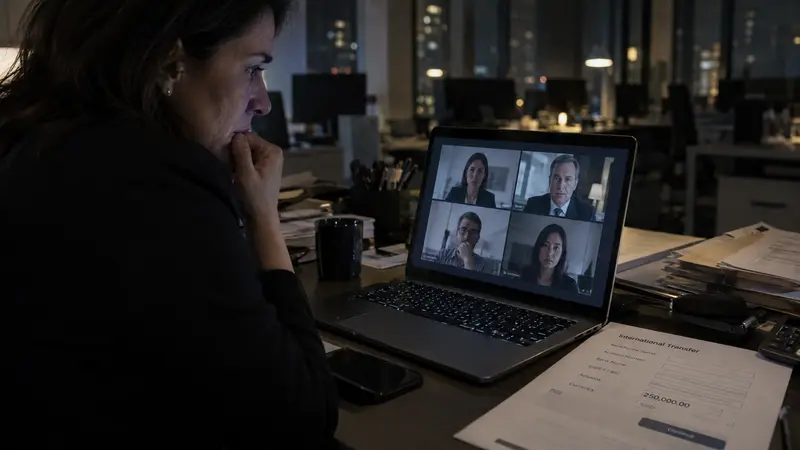
An employee of the engineering firm Arup in Hong Kong transferred about US$25 million after a video call in which every other “colleague”, including the CFO, was a deepfake (2024).
Source: CNN ↗US complaints that referenced AI reached tens of thousands of reports and hundreds of millions of dollars in losses in the FBI’s latest annual internet-crime data.
Source: Forbes ↗In a bank study, 89% of people believed they could spot a deepfake scam — only 42% actually did when tested.
Source: Vectra AI ↗
Warning signs
- Extreme urgency and secrecy (“don’t tell anyone, send it now”).
- Requests for gift cards, crypto or unusual transfers.
- A familiar voice that avoids personal questions only the real person would know.
- Video where lighting, lips or edges of the face look slightly off.
What you can do
- Agree on a family “safe word” for emergencies.
- Hang up and call back on a number you already know.
- At work, never approve payments based on a call or video alone — confirm through a second channel.
- Limit public audio and video of yourself where possible.
In-depth guide
How to Spot a Deepfake
How to spot deepfake images, videos and cloned voices — the visual clues that still work, the ones that no longer do, and the checks that actually protect you.
Read the guide →In-depth guide
How to Protect Yourself From AI Voice-Cloning Scams
Scammers can now clone a loved one’s voice from a few seconds of audio. How AI voice-cloning scams work, the warning signs, and simple steps that protect your family and your money.
Read the guide →Frequently asked questions
What is the danger of deepfakes in AI?
AI can now clone a person’s voice from a few seconds of audio and generate a realistic video of their face in real time. Criminals use this to impersonate family members, bosses and public figures, and to steal money, data and trust at a scale that was impossible a few years ago.
How does it happen?
A short clip from social media is enough to clone a voice. Live face-swap tools let a scammer appear as someone else on a video call. Fake “emergency” calls from a loved one pressure victims to send money fast. Fake videos of celebrities and officials promote investment and crypto scams. Deepfake candidates pass remote job interviews to get inside companies.
How can I protect myself?
Agree on a family “safe word” for emergencies. Hang up and call back on a number you already know. At work, never approve payments based on a call or video alone — confirm through a second channel. Limit public audio and video of yourself where possible.
Latest updates on deepfakes
Deepfake Watchlist: new incidents from the week of September 18–24
A weekly roundup of newly reported deepfake incidents — impersonation scams, fake media and the responses to them — showing how quickly AI-generated fraud keeps spreading.
What do you think?
Seen this danger up close? Worried about it? Share it with the community.
Share your thoughts on deepfakes